10 Essential Tips for Managing Possums in SE Queensland
Home Maintenance, Wildlife, South East Queensland
10 Things Every Homeowner in South East Queensland Should Know About Possums
Living in South East Queensland means sharing your suburb with possums. Understanding their behaviour, legal protections, and practical management options is essential if you are hearing thumping noises in the roof or heavy scratching sounds in the ceiling at night.
Living With Possums in SEQ
What every homeowner needs to know before taking action
1. They Are Relentless About Entry Points
Common Brushtail possums are surprisingly strong and determined. They will pry up loose roof tiles, bend thin aluminium flashing, rip at rotting fascia, or squeeze through gaps as small as a tennis ball to reach a warm ceiling cavity. This is why professional possum roof entry point sealing is critical if you want to know how to get a possum out of roof space permanently. A licensed specialist in possum removal Gold Coast or possum removal Brisbane will carefully inspect all ridges, eaves, vents, and gables for even tiny openings.
2. They Are Strictly Territorial and Solitary
Adult Brushtail possums are solitary animals that defend a defined home range. They mark territory with scent glands and urine, which is why some homeowners notice a strong possum urine smell in roof spaces. Because they are territorial, removing one resident without proper possum proofing Gold Coast or Brisbane-wide simply invites another possum to take over the newly vacant roof “real estate”.
3. Queensland Law Prohibits Relocating Them Far Away
Are possums protected in QLD? Yes. Under Queensland’s Nature Conservation Act, all native possums are protected wildlife. QLD possum laws relocations 25m are very specific: if a possum is trapped, it must be released on the same property, within 25 metres of the capture point. In practice, this means you cannot legally drive a trapped possum to bushland or a distant park. Only licensed operators for humane possum removal South East QLD are permitted to handle and release them in accordance with these rules.
4. Distant Relocation Is Usually a Death Sentence
Even if it were legal, distant relocation is rarely kind. Possums are highly territorial; dropping one into another possum’s territory often leads to violent conflict, injury, or death. A relocated animal must also cope with unfamiliar food sources, roads, dogs, and stress. For this reason, wildlife experts strongly discourage “dumping” possums. The ethical approach is to keep the animal in its own territory while excluding it from your roof through careful sealing and alternative housing.
5. Thumping vs. Scratching: Possum or Rat?
Many homeowners want to know how to tell if possum or rat in roof cavity. Rats produce light, rapid scampering and fine, high-pitched scratching. Possums, by contrast, are heavier marsupials. Their movement sounds like slow, deliberate walking, loud thumps as they land, or dragging that can make the whole ceiling shake. If you hear heavy scratching sounds in ceiling at night or distinct thumping noises in roof Brisbane homes, a possum is more likely than a rat, especially around dusk and pre-dawn.
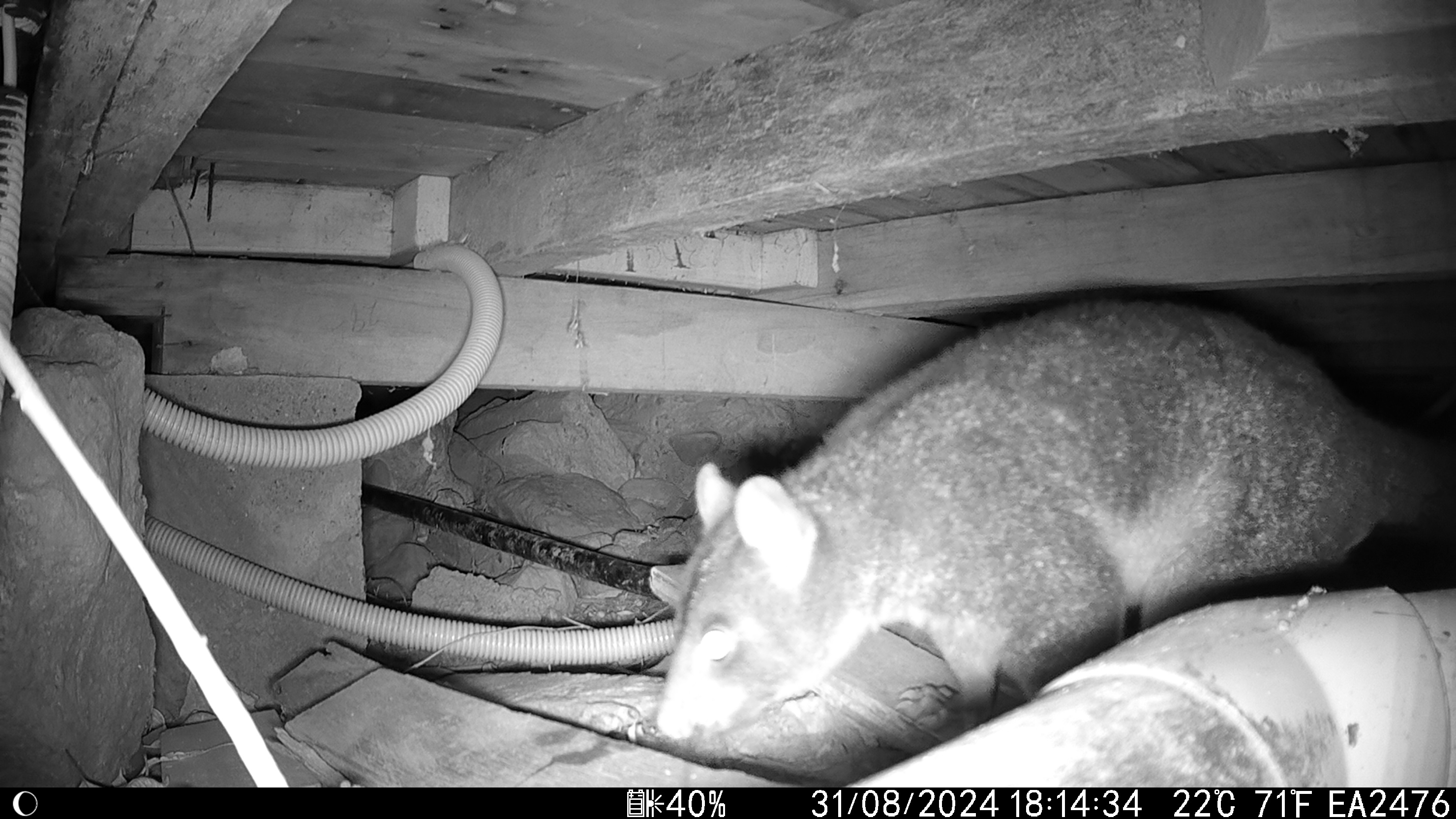
Most possum roof invasions start where overhanging branches meet loose tiles or damaged flashing.
6. Two Main Possum Species in South East Queensland
The Common Brushtail Possum is the classic roof invader: cat-sized, copper to grey fur, with a dark bushy tail. The Common Ringtail Possum is smaller, with a white-tipped prehensile tail, and typically builds football-shaped nests (dreys) in dense shrubs rather than ceilings. Both may visit your garden at night, but Brushtails are the usual reason people search for an emergency possum catcher near me when noise and mess become overwhelming.
7. They Are Heavy Sleepers During the Day
Possums are nocturnal and sleep deeply in dark roof cavities through the day. Well-meaning homeowners sometimes attempt DIY repairs while the animal is inside, accidentally sealing it into the roof. Trapped possums will panic, claw at plasterboard, and may die, creating odours and insect problems. Always confirm the possum has left for the night before sealing, or better yet, engage humane possum removal South East QLD professionals who use one-way exits and strict timing to avoid harm.
8. Overhanging Trees Are Their Primary Highways
More than 90% of roof invasions begin with overhanging branches. Possums can easily jump two to three metres from a tree onto your gutter line or ridge. Trimming back trees is also a key step if you are wondering how to keep possums out of fruit trees, as it makes it harder for them to access both your roof and your produce. When combined with possum box installation trees Gold Coast or Brisbane gardens, pruning helps redirect possums to safer, natural pathways.
9. Trapping Alone Won’t Solve the Problem
Simply trapping and releasing a possum outside your house is only a temporary fix. Unless the original entry hole is permanently blocked with solid timber or heavy galvanised mesh, the same possum will re-enter that night, or a neighbour’s possum will quickly claim the vacancy. Effective possum removal Gold Coast and possum removal Brisbane services always combine legal trapping with thorough possum roof entry point sealing to achieve a long-term result.
10. Possum Boxes Provide the Ultimate Alternative
To move a possum out of your roof humanely, you must provide an alternative den within its territory. Installing a sturdy, weatherproof nest box high in a suitable tree gives the animal somewhere safe to sleep once roof access is blocked. Professional possum box installation trees Gold Coast and Brisbane specialists will position the box away from powerlines, at the right height, and near existing travel routes. When combined with compliant trapping and proofing, this is the most reliable answer to how far can you move a possum QLD lawfully and how to get possum out of roof space permanently while respecting wildlife protections.
